


Rainwater Contamination in Mining Areas: A Hidden Threat to Biodiesel Quality and Performance
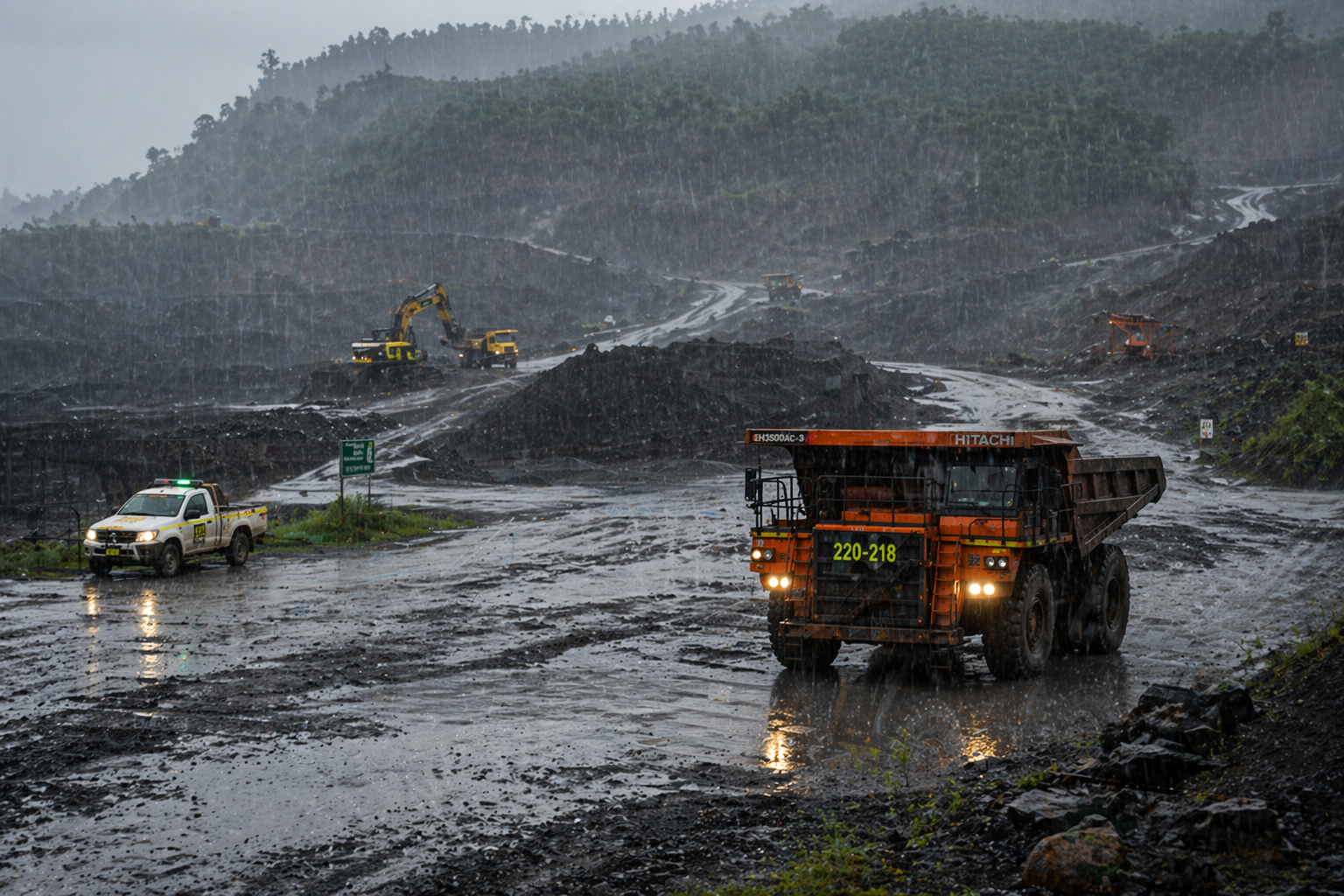
Heavy Rainfall Threatens Fuel Quality in Mining Operations, Raising Risk of Equipment Failure
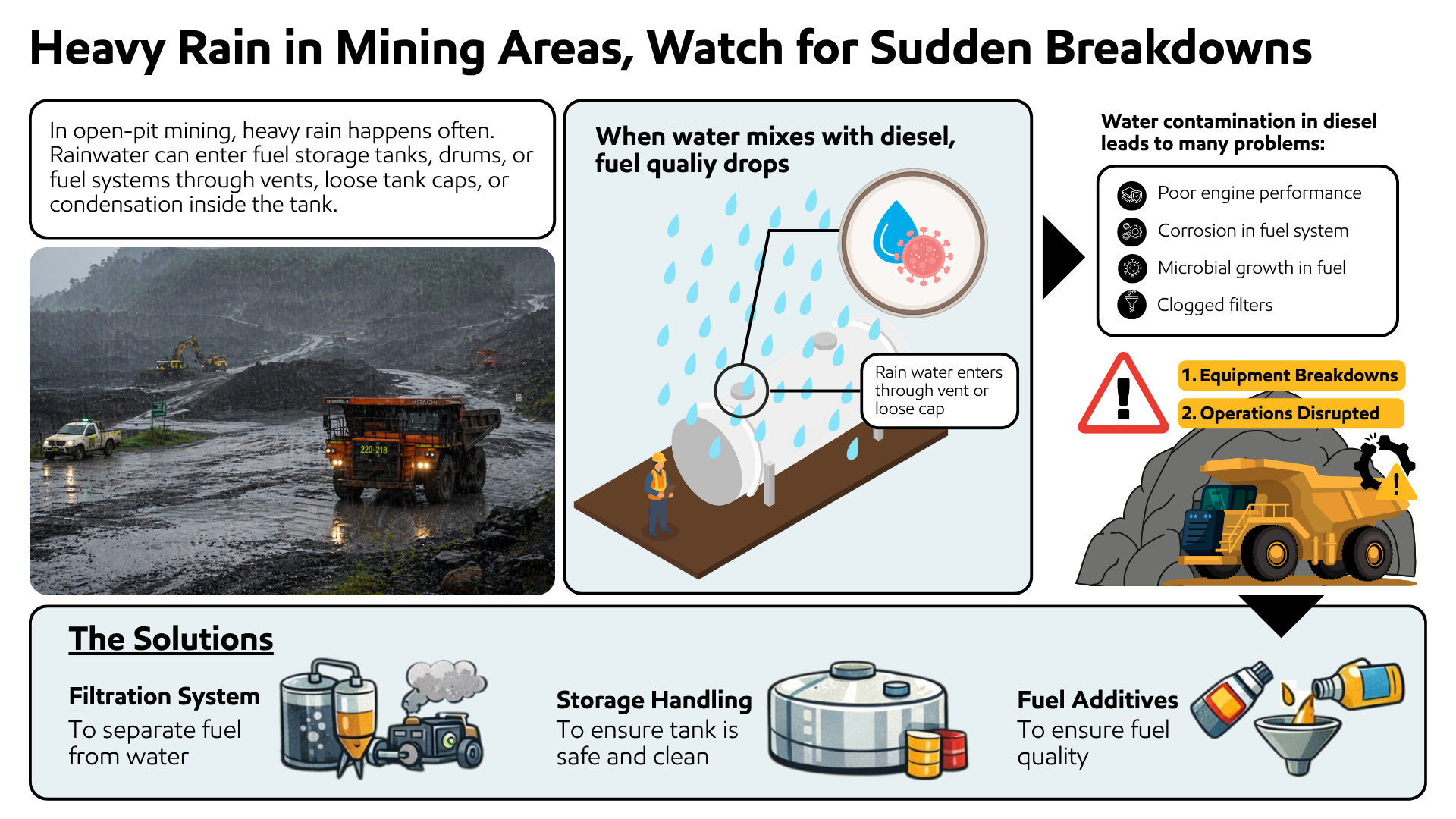
Heavy rainfall is a frequent challenge in open-pit mining, where water can enter fuel tanks, drums, or distribution systems through vents, loose seals, or condensation inside the tank. When water mixes with diesel, fuel quality drops significantly—leading to inefficient combustion, corrosion in the fuel system, microbial growth, and faster filter clogging. According to the U.S. Energy Information Administration, maintaining fuel quality is critical because contaminants like water can reduce energy efficiency and damage engine components, ultimately affecting operational reliability. In mining environments, this risk is amplified, as declining fuel quality can reduce heavy equipment performance and even trigger unexpected breakdowns during peak production, disrupting operations.
To prevent water contamination, several measures can be implemented. Using a water separator helps remove water from diesel before it reaches the engine. Proper storage infrastructure is equally important, including tanks with effective drainage systems, adequate ventilation, and tightly sealed covers to minimize water ingress. Additionally, fuel additives can be applied to control microbial growth and maintain fuel stability over time. Together, these practices help ensure consistent fuel performance, protect equipment, and sustain productivity in challenging mining conditions.
(source: U.S. Energy Information Administration)